Giving Consumers and Carers a Seat at the Table
A two-year graphic facilitation program helping a major hospital act on the Royal Commission’s call to genuinely listen.
A two-year graphic facilitation program helping a major hospital act on the Royal Commission’s call to genuinely listen.
In 2020, the Royal Commission into Victoria’s Mental Health System found that people with lived experience of mental ill-health had been systematically underrepresented in decisions about the services meant to support them. For St. Vincent’s Hospital Melbourne’s Transformation Team, that finding created a clear mandate, and a hard practical question: how do you run a consultation process that’s genuinely accessible to people navigating personal complexity, cognitive load, language barriers, or a history of not being heard, without just reproducing the same power imbalances in a different format?
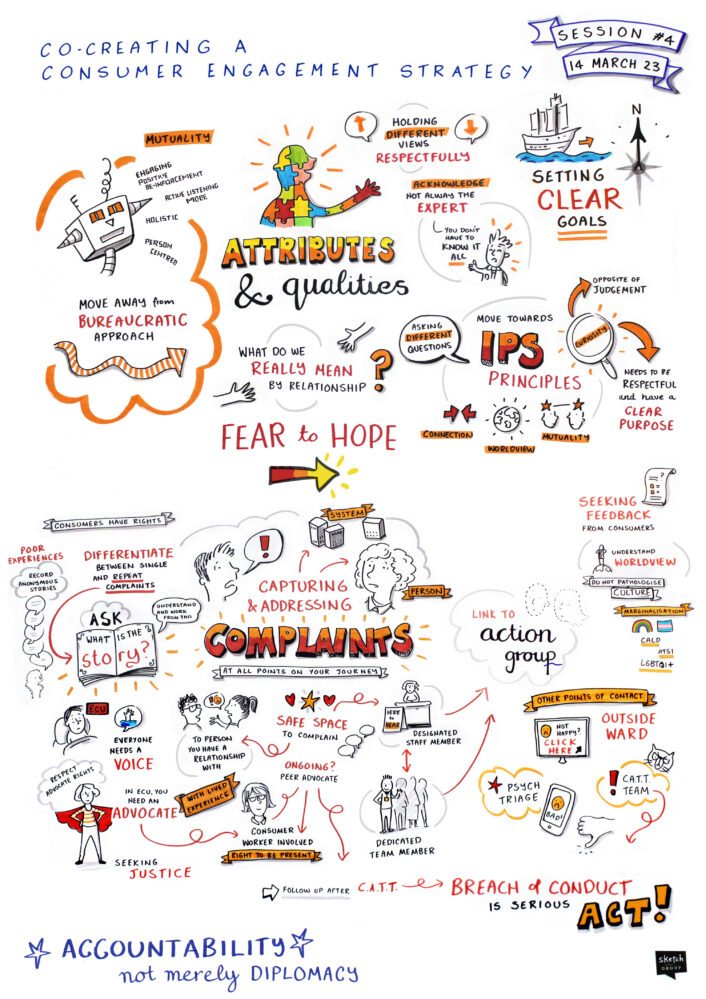
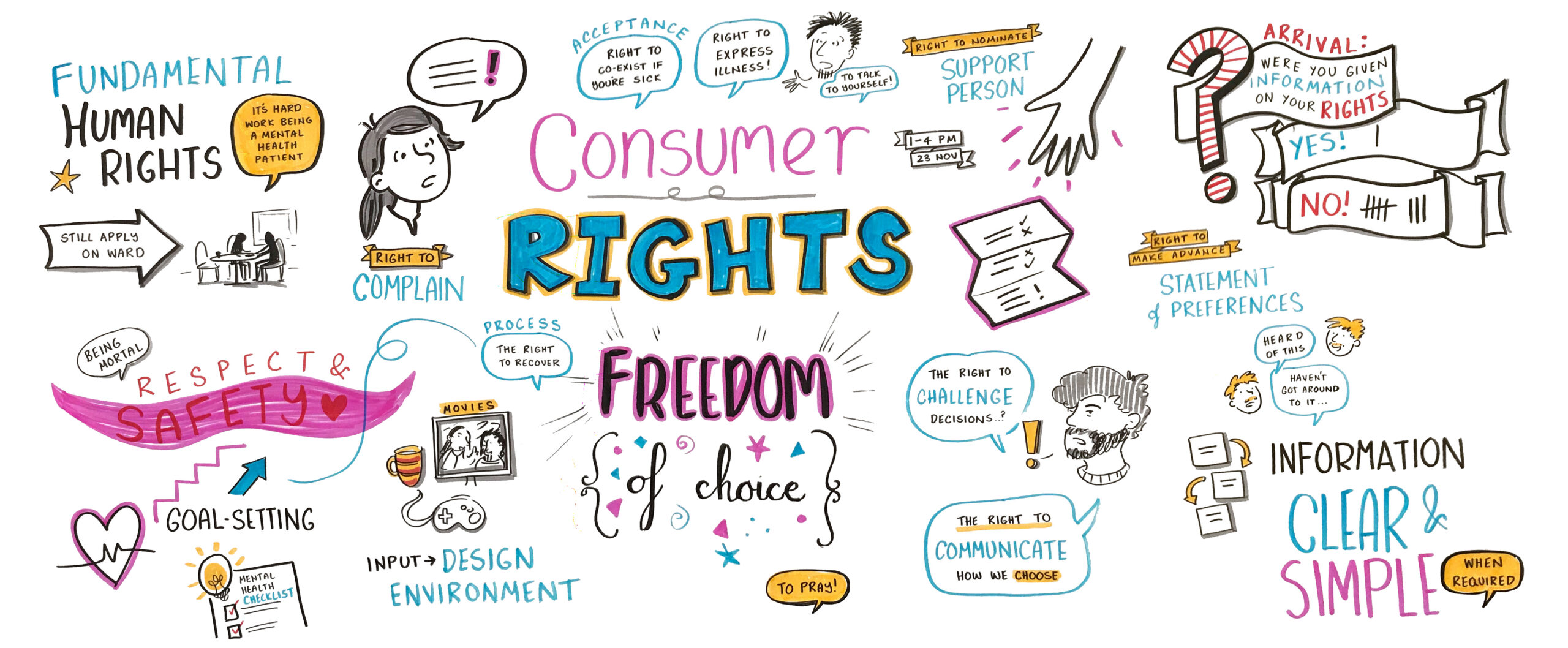
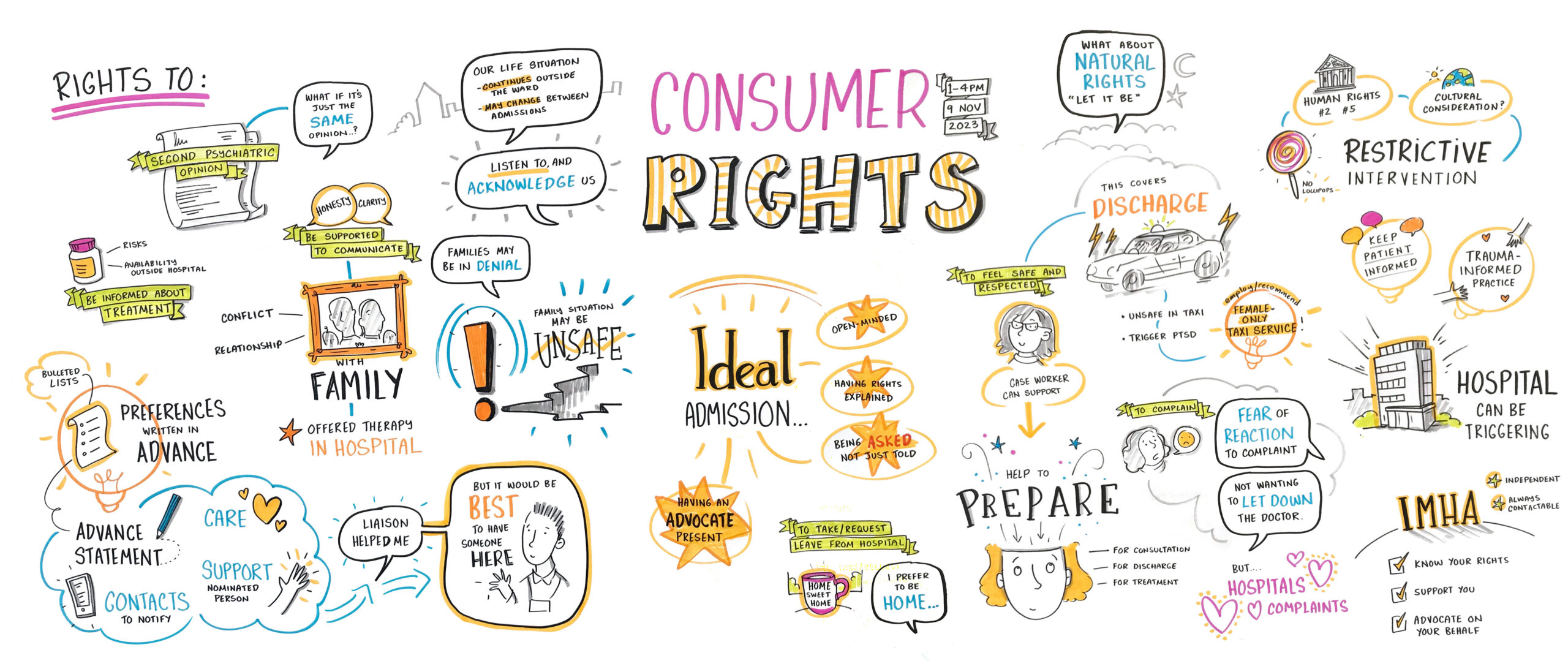
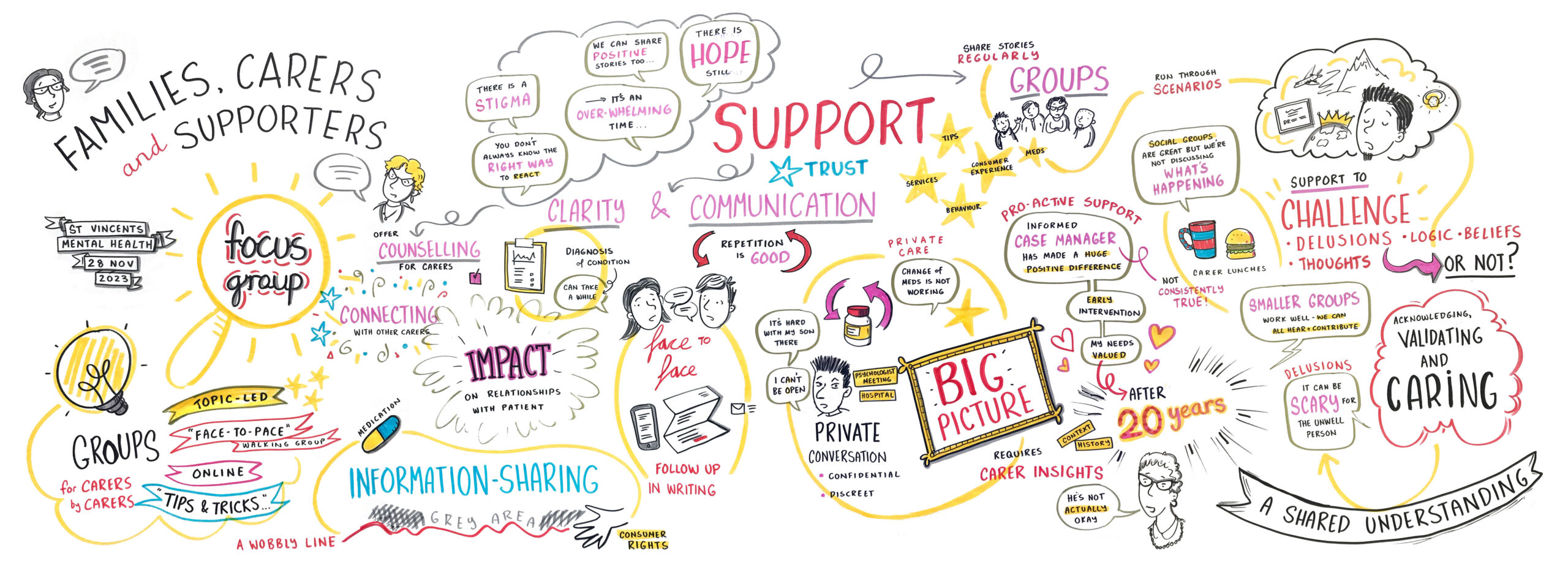
Traditional focus groups and written consultations risked doing exactly that. SVHM’s Transformation Team proposed a different approach: a skilled illustrator capturing every conversation live, visible to everyone in the room throughout.
Funded through the St. Vincent’s Health Australia Health Equity Program, the project ran across three engagement streams over two years: 11 consumer focus groups, 6 carer focus groups, and 2 staff and management workshops. Some consumer sessions were held directly in SVHM inpatient wards; carer sessions ran in quiet community venues; staff sessions in clinical meeting rooms.
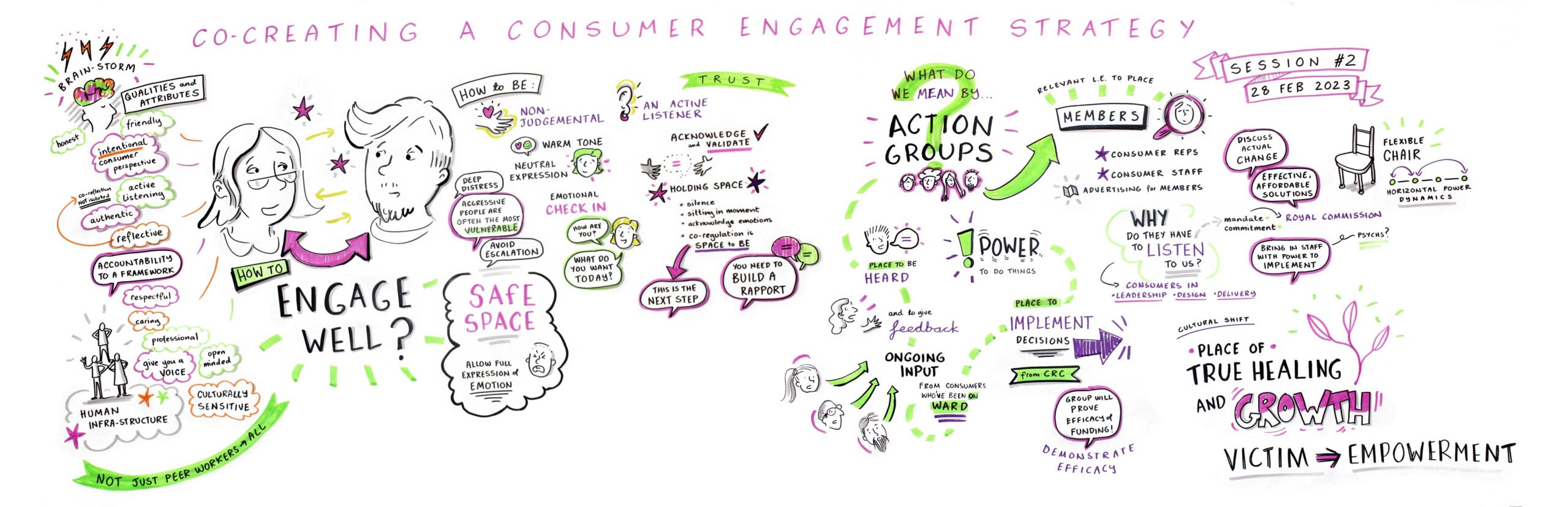
In every session, our illustrators worked in close partnership with SVHM’s clinical facilitators, capturing the conversation live on large-format paper as it unfolded, visible to the whole room the entire time. Participants could see their own words take shape, correct anything that felt misrepresented, and build on what had already been drawn. At the end of each session, participants completed a short, accessible survey using visual anchors, smiley faces, ticks, stars, designed to reduce cognitive load for a cohort for whom a standard written survey would be its own barrier.
Across two years, this became a live, evolving record of consumer and carer experience: individual session sketches capturing focus group discussions in real time, and consolidated studio visuals synthesising themes and narratives across multiple sessions into single, cohesive pieces. The completed artefacts didn’t just document the conversation, they were displayed in SVHM clinical areas long after each session ended, continuing to prompt conversation between staff and service users months later.
The project’s credibility grew enough that SVHM clinical staff chose to present the findings at two national conferences in 2024, TheMHS National Conference in Canberra and the Occupational Therapy Australia National Conference in Melbourne, with Sketch Group graphically facilitating both presentations live.
The results held consistently across every cohort measured, consumers managing active mental health conditions, family carers attending their first-ever focus group, clinical staff, and conference delegates alike:
Beyond the numbers, facilitators observed the format doing something written methods couldn’t: helping participants from non-English-speaking backgrounds engage through visual as well as verbal means, giving people a way back into the conversation after losing focus in a complex clinical environment, and creating what one staff facilitator described as a genuinely different, more equitable quality of participation in the room.
For the complete findings, including methodology and full survey results across all cohorts, download the full research report (PDF).
“I am a visual learner. The meeting was more interactive, exciting and enjoyable. The sketcher captured everything accurately and reflected the learning succinctly. Absolutely amazing to be involved in this exercise!”
Workshop Participant