
Most business problems look like execution problems:
- Missed deadlines
- Misaligned teams
- Actions that made sense in the strategy workshop, but somewhere between the boardroom and the desk dropped off the priority list…
But spend enough time in those rooms (and we have) and a different pattern starts to emerge. It’s rarely that people aren’t working hard enough, or that the strategy was wrong, or that the team lacks talent.
It’s that the thinking was never visible.
When thinking is invisible, alignment becomes guesswork. When ideas live only in someone’s head, collaboration is more hope than practice. And when teams can’t see how they think, individually or collectively, they’re navigating without a map.
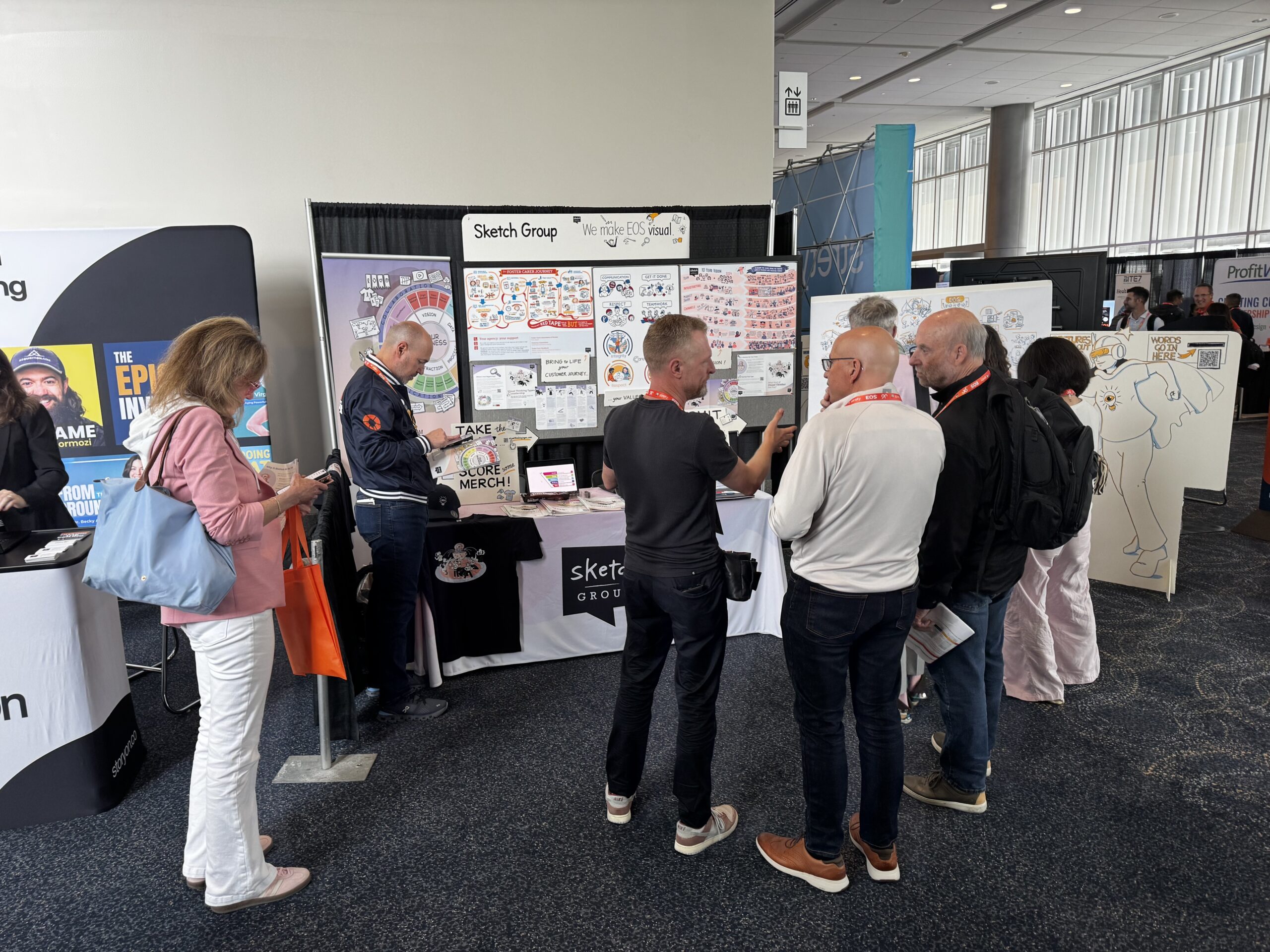
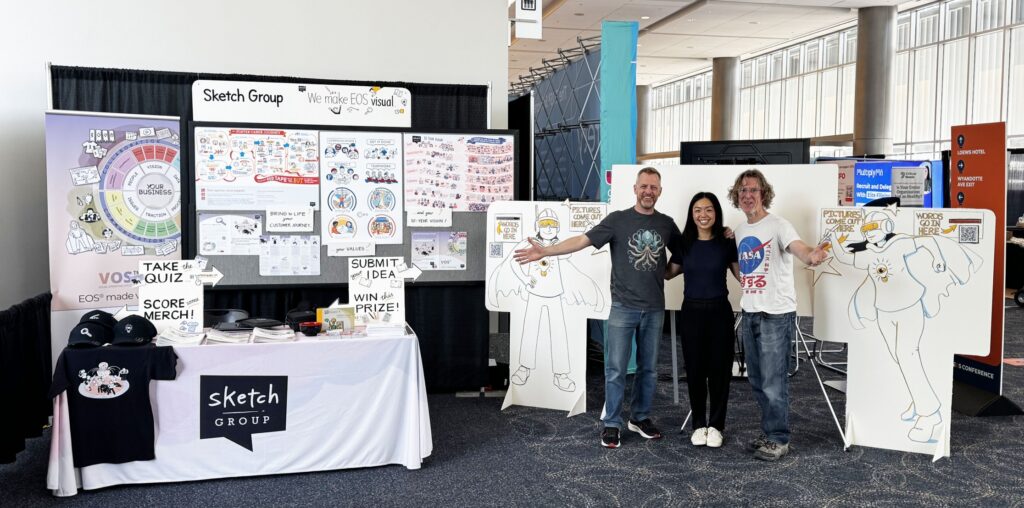
That’s the problem we built our Visual Operating System to solve. And last month, we took it to the EOS Worldwide Conference in Kansas City (our first international conference as a sponsor!) to find out how that idea landed with a room full of people who run, coach, and build organisations for a living.
The EOS community
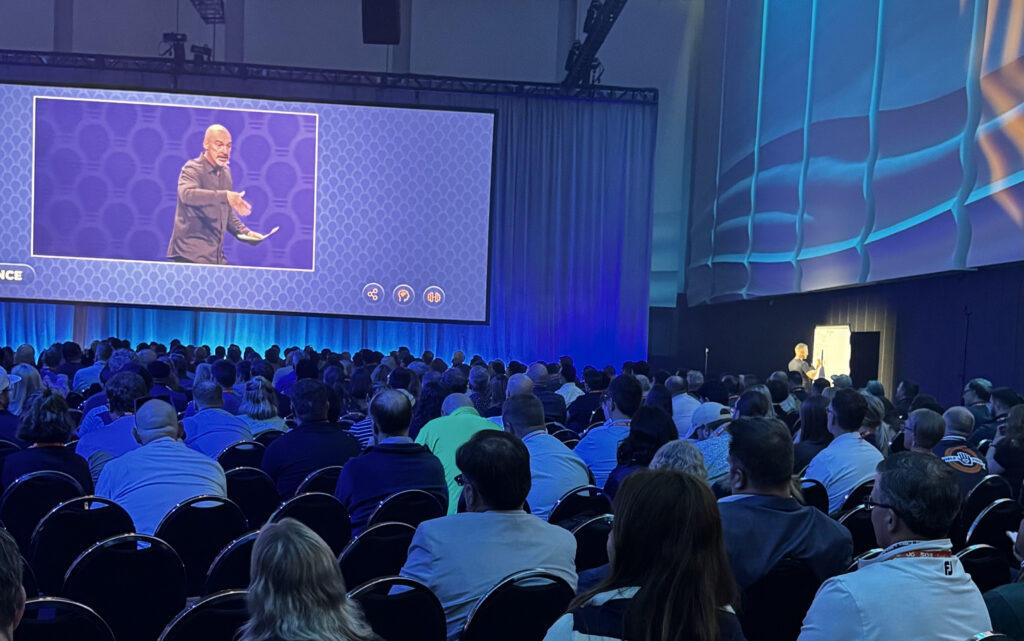
If you’re not familiar with EOS, the Entrepreneurial Operating System, the short version is this: it’s a framework that helps businesses get clarity, build accountability, and create traction. Conceived by Gino Wickman, today tens of thousands of businesses run on EOS. The community around it is enthusiastic, practical, and deeply invested in one question:
How do you make an organisation actually work?
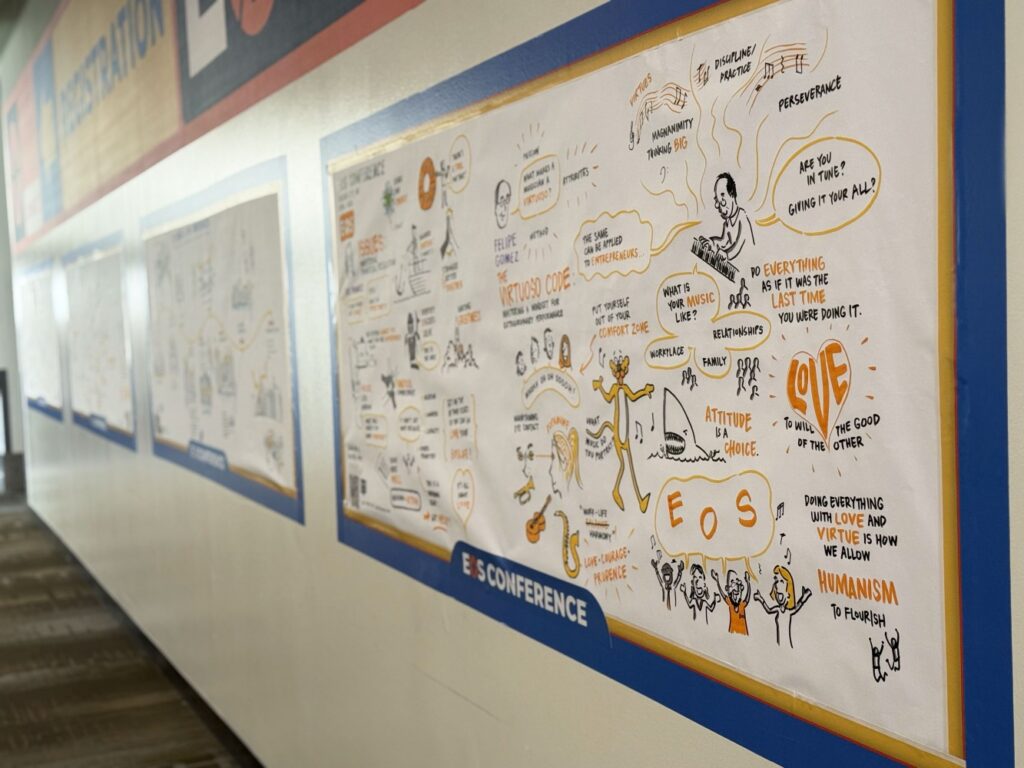
We were there to capture the conference: keynotes, sessions, the ideas in the air. But we were also there to test something.
We wanted to know what happened when you put visual thinking in front of people who’ve already committed to operational rigour, i.e. people who don’t have patience for things that sound good but don’t do anything.
What your Visual Thinking Type says about your team
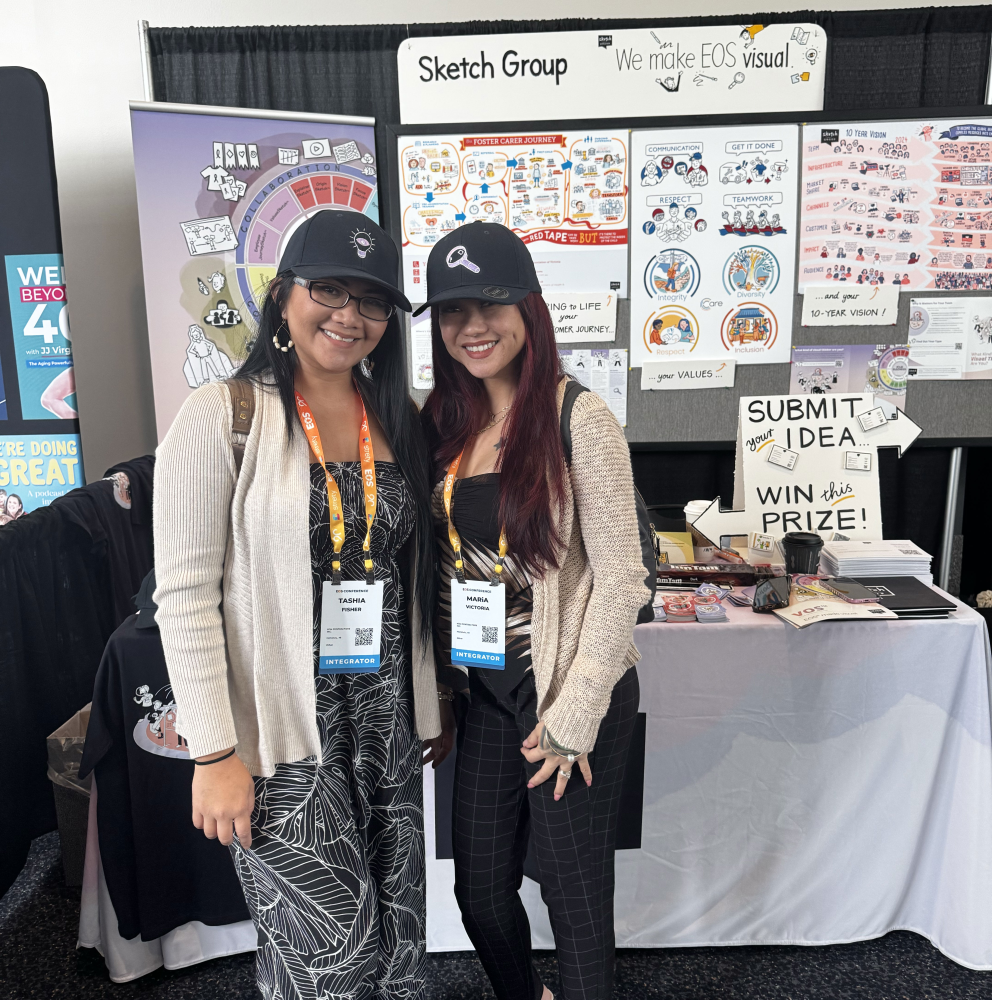
Our first activation was the Visual Thinking Type quiz: a tool that helps people discover how they naturally use visuals to communicate and process ideas. Whether you’re big picture, analytical, exploratory… most of us have never been asked which one we are. And most teams have never mapped it across a room.
The quiz takes minutes. The conversations it sparked went much longer.
What kept coming up from attendees was the team aspect. People weren’t just thinking about themselves. They were thinking about their colleagues. My CMO is definitely this. My co-founder is that. That actually makes sense… no wonder we keep missing each other in planning meetings!
That’s the insight that visual thinking keeps surfacing: the problem isn’t always the idea, or the person, or even the process. Sometimes it’s that people think differently and nobody has ever made that visible, let alone worked with it.
Watching ideas become real
The second activation was our IdeaSketch, where we took people’s actual ideas and made them visible in real time on a collaborative canvas.
We encouraged people to use their imagination to challenge Andy, our illustrator, and the EOS community delivered: a “negative thought” remover; a teleportation device; a remote control for pausing time. Within minutes, the idea was there: drawn out, real, alive.
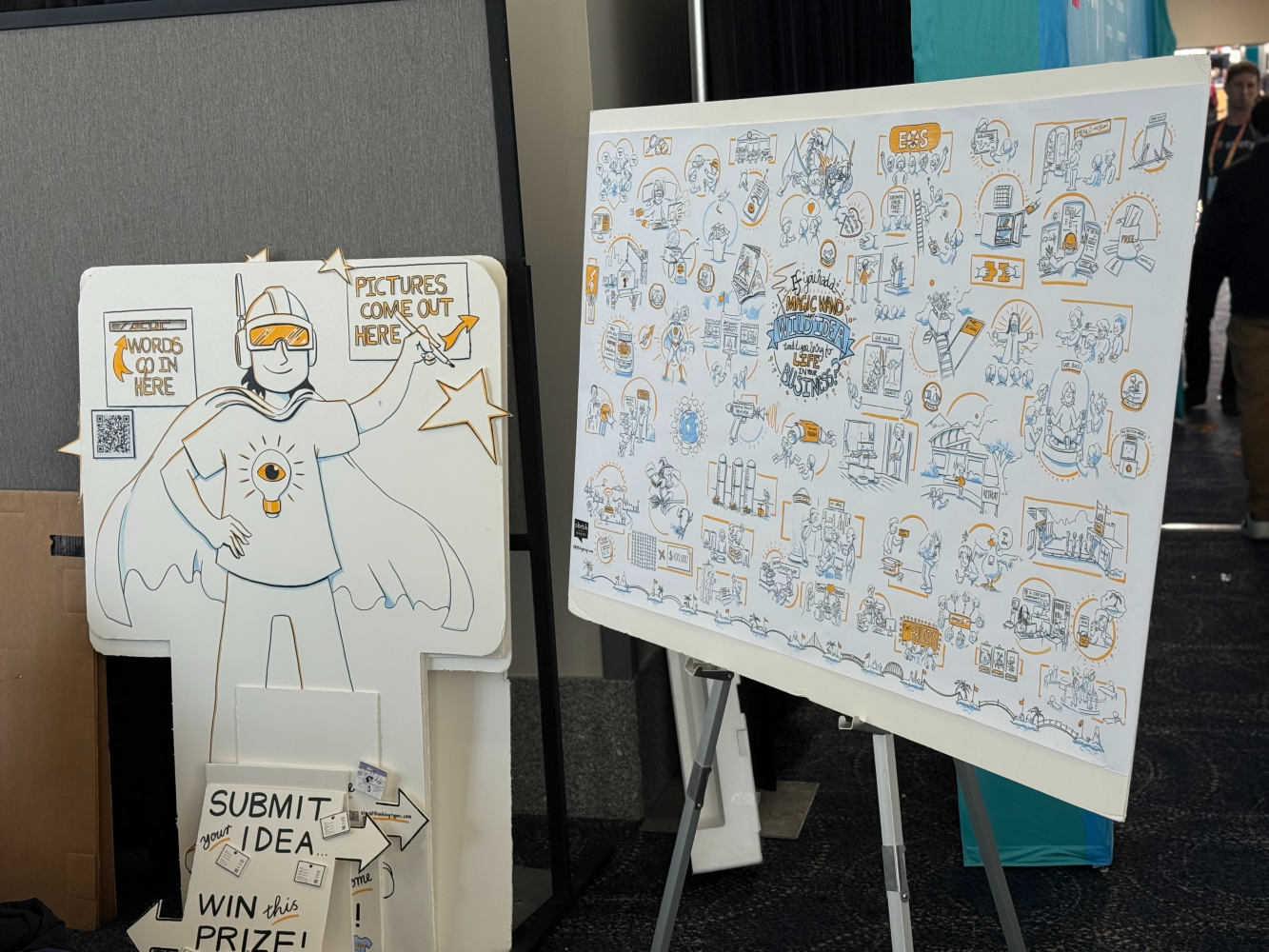
Of course many of these ideas are wild and far-fetched. But like many far-fetched ideas, they often triggered other more practical ideas. They acted as a launchpad for exciting conversations because the originator of the idea could finally see what they’d been thinking.
There’s something that happens when an idea moves from inside your head to outside it. It becomes something you can point to. Something others can respond to. Something that can actually go somewhere.
That’s what visual thinking does. And watching it happen, over and over, across two days of conversations with business leaders and coaches and operators, it didn’t get old. It never really does!
Two operating systems, one territory
The EOS framework gives organisations the structure to run well, with a set of robust tools: rocks, scorecards, Level 10 meetings, the Accountability Chart. EOS is a system designed to create clarity about what needs to happen and who owns it.
Our Visual Operating System extends this idea, to make business visible. Making a business visible allows others (leadership, staff, contractors, customers) to understand it, buy into it, and remember it. It sparks conversations, triggers new ideas, and gives shape to amorphous blobs that previously sat in the periphery. People get inspired, and it sticks.
What this meant to us
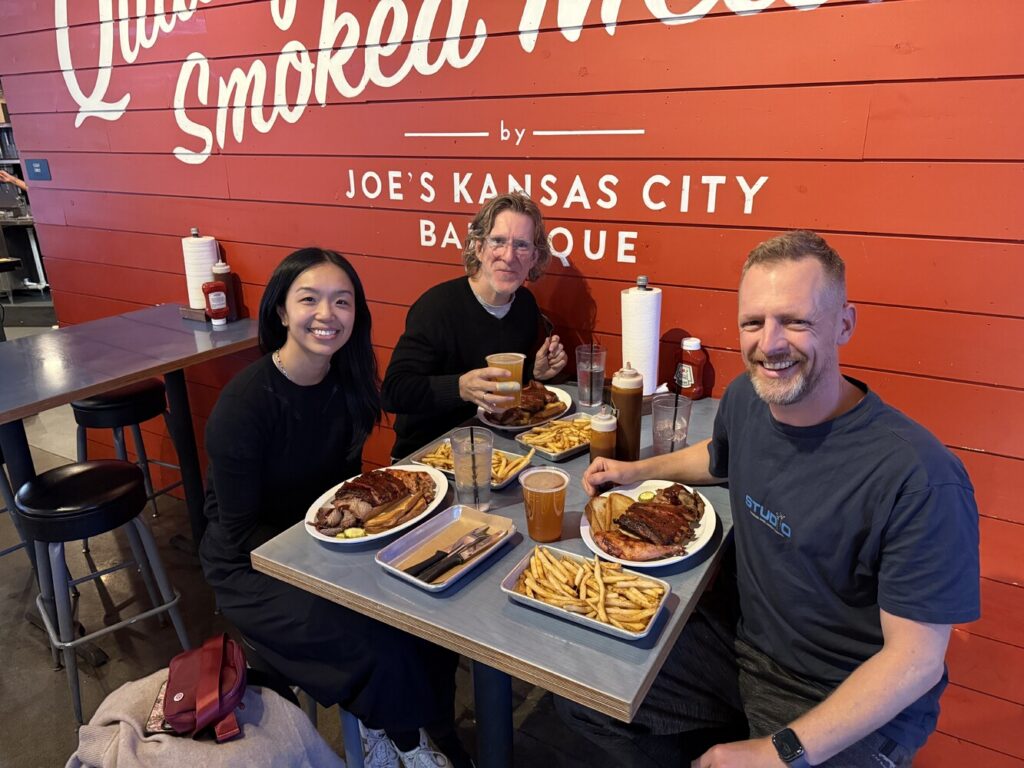
Andy, Gloria, and I had a lot of fun on this trip. We spent a few days afterwards being tourists and eating yummy food. So when I started writing this conference wrap-up post, the original version listed out all the things we did:
- Booth set up ✅
- Activations running ✅
- Keynotes captured ✅
- Ate too much BBQ and went to a baseball game (Go Royals!) ✅
But that version misses the big thing that we’re still buzzing about. What was most exciting and validating for me was just how much people lit up when they understood this. They weren’t excited for having another tool or framework; they were excited about a way of working that acknowledges the power of using visuals to bring to life the ideas, strategy, culture, relationships, and processes that make a business work. If you can’t see that stuff, you’re flying blind. But we can help.
We went to Kansas City to introduce our work to a new community. We came home more convinced than ever that the problem we’re solving is real, it’s widespread, and it matters.
It’s a pretty good feeling!