Translated documents alone rarely reach culturally and linguistically diverse (CALD) communities effectively, because translation converts words but not necessarily comprehension. A visual-first approach — using diagrams, live-sketched summaries, and short illustrated video rather than dense translated text — communicates structure and meaning in ways that cross language and literacy barriers, complementing (not replacing) accredited interpreters and translators.
Picture this: your council has just spent three weeks preparing a community consultation on a new local infrastructure project. The fact sheets are polished. The FAQs are comprehensive. The website page ticks every accessibility box you can think of. And still, on the night of the community forum, the room is full of the same faces you always see — and the neighbourhoods with the highest concentration of Vietnamese, Arabic, Karen, or Punjabi speakers are, once again, almost entirely absent.
This isn’t a failure of effort. It’s a failure of format.
The problem isn’t translation — it’s comprehension
Most councils and government bodies already have translation processes in place. Documents get sent to language services, key pages get a “translate this page” widget, and multilingual flyers go out with the best intentions. But translation solves only half the problem. It converts words into other words. It doesn’t solve the deeper issue: whether the message itself — its structure, its logic, its call to action — actually lands with someone reading it in a second, third, or fourth language, often while tired, time-poor, or unfamiliar with local bureaucratic conventions.
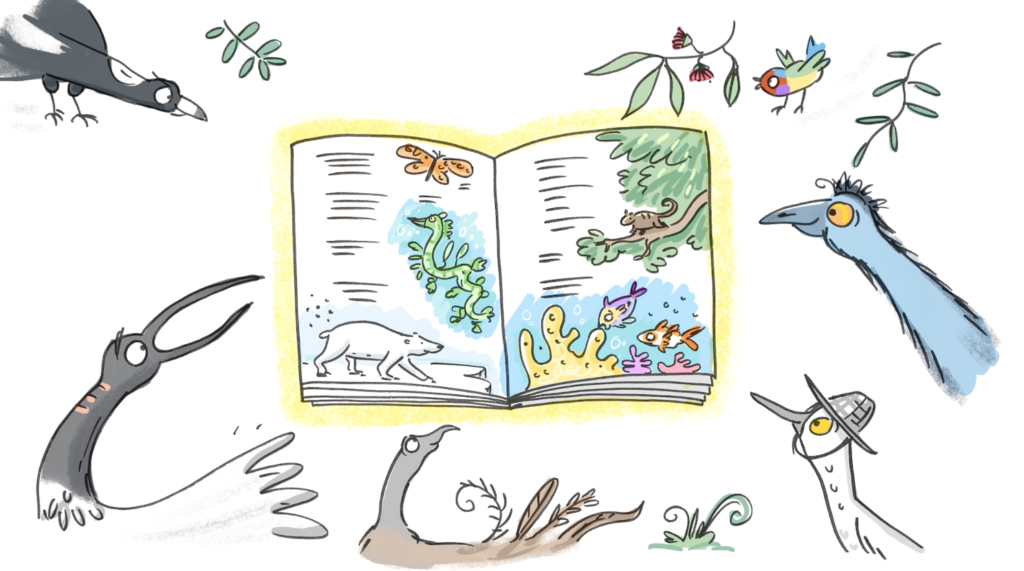
A ten-page consultation document translated into Farsi is still a ten-page document. A council rates notice translated into Mandarin is still built around Western administrative logic that may not map neatly onto every reader’s frame of reference. Translation preserves accuracy. It rarely preserves clarity.
And for community engagement teams working under tight deadlines with statutory consultation windows, this creates a genuine dilemma: how do you communicate something complex, time-sensitive, and often contentious, to a community that speaks dozens of different first languages — without either watering the message down or losing entire cohorts of residents altogether?
Why visual communication changes the equation
This is where Sketch Group’s approach differs fundamentally from a language-services model. Rather than starting with text and translating outward, our services start with meaning — building the message as an image, a metaphor, a sequence, or a live-drawn narrative that carries its logic visually, before a single word is chosen.
A well-designed visual doesn’t need to be translated to be understood. A diagram showing “before this project” and “after this project,” a simple icon-based timeline of a consultation process, or a live-sketched map of how a proposal affects different parts of a neighbourhood — these communicate structure and sequence in ways that cross language barriers far more reliably than paragraphs of prose ever could.
This is the thinking behind services like:
- LiveSketch™ — capturing a community forum or engagement session in real time as an evolving visual narrative.
- IdeaSketch™ — capturing the input from the community, so residents who don’t feel confident speaking up in English can see their input reflected back visually, and feel heard and seen.
- VideoSketch™ — pairing visual storytelling with short-form video, ideal for social and community channels where residents are scrolling quickly and won’t stop for a wall of translated text, but will pause for a compelling drawn sequence.
Visuals as a genuine equity tool for CALD communities
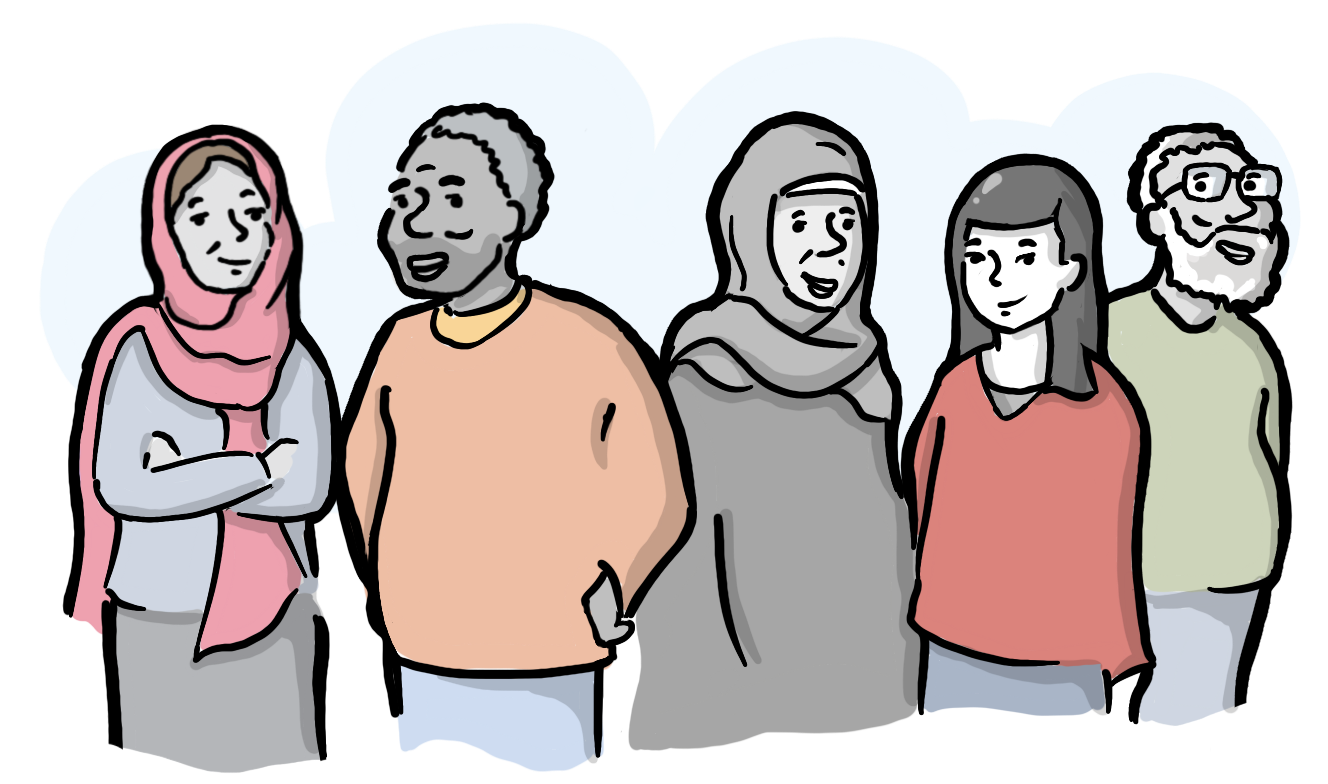
There’s a broader point here that goes beyond language. Councils are often engaging communities where literacy levels, cultural communication norms, and comfort with formal written English all vary enormously — sometimes within the same household. A visual-first approach reduces the advantage held by fluent English readers and levels the playing field for everyone else, including older residents, people with lower literacy, and those who process information more naturally through story and image than through text.
We’ve seen this play out directly in our own work. When the ACT Human Rights Commission needed to explain a new code of conduct to a health workforce that included practitioners from a wide range of CALD communities, the solution wasn’t more translated documents — it was a single explainer video built around universal imagery and open captioning, designed to be understood at a glance regardless of a viewer’s first language. You can read the full breakdown on our case studies page.

This is also why our Visual Operating System (VOS®) framework treats visual communication as infrastructure, not decoration. It’s built to sit alongside — not replace — accredited translation and interpreter services, giving engagement teams a layer that carries the shape of a message across language and literacy divides, while translated text carries the specific detail for those who want to read further.
What this looks like in practice
For councils and government engagement teams, this might mean:
- Opening a consultation with a single explanatory visual, distributed across community language channels, before the full written material follows
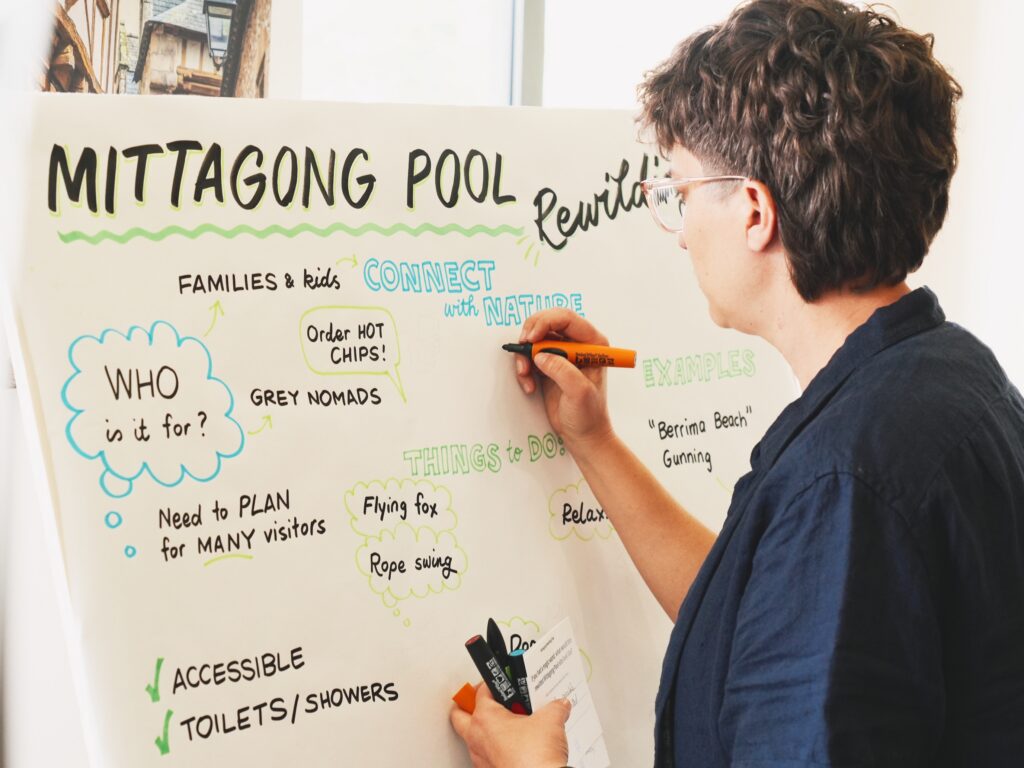
- Using live-sketched summaries at multicultural community forums so every attendee — regardless of which language session they’re in — walks away with the same core visual reference
- Building social assets where the image carries the message, with translated captions supporting rather than carrying the weight of understanding
- Creating simple sequential graphics for time-sensitive information (rates due dates, road closures, emergency guidance) where speed of comprehension matters more than nuance
None of this replaces the specialist role of accredited interpreters and translators. It complements it — addressing the gap that exists before and around translation, where the goal isn’t just accuracy of words but genuine, felt understanding.
True visibility means everyone can see themselves in the message
For engagement professionals working across Australia’s genuinely multilingual communities, the aim isn’t simply to be compliant with language access obligations. It’s to be understood — by everyone, not just those who happen to be fluent in English or confident navigating council communications. That’s what true visibility looks like: not more words in more languages, but messages built, from the ground up, to be seen and understood by the whole community they’re meant to serve.
If your team is planning a consultation, campaign, or community engagement process and wants to explore what a visual-first approach could look like for your next project, we would love have a chat.