When your organisation does not have team alignment, the signs are everywhere: duplicated effort, decisions that get relitigated in every meeting, and a strategy that means something different to everyone. It’s not a people problem — it’s a communication problem. The good news is that the solution doesn’t require a restructure or a lengthy change management process — it requires a better way of showing people where you’re going.
What Does “Team Alignment” Actually Mean?
Team alignment means every person in your organisation understands the same vision, speaks the same language, and pulls in the same direction — regardless of role, department, or location.
In practice, alignment breaks down when:

- Leaders assume a message landed because they said it once
- Strategy lives in a document no one reads past page two
- Different teams interpret the same goal in completely different ways
- New team members take months to understand how the organisation really works
- Meetings end without shared clarity on what was decided or why
The cost of misalignment is real. It shows up as rework, friction, slow decision-making, and disengaged people who feel like they’re always catching up.
Why Words Alone Aren’t Enough
Most organisations try to solve team alignment through text: emails, slide decks, handbooks, strategy documents. These tools have their place. But they share one fatal flaw — they’re easy to skim.
The human brain processes images 60,000 times faster than text. When we see a picture, diagram, or visual map, we don’t have to decode meaning word by word. We perceive it whole, orient ourselves within it, and we remember it.
This is why a well-crafted visual does something no email ever can: it creates a shared mental model. When everyone in a room has literally seen the same picture, they are far more likely to be thinking the same thoughts.

Frequently Asked Questions About Visuals and Team Alignment
1. What is visual storytelling in a business context?
Visual storytelling means communicating ideas and strategy through images, diagrams, and illustrated scenes — not just words. It translates complex concepts — strategy, change, values — into a visual format teams can see, discuss, and remember
2. How do visuals help with organisational alignment?
Visuals help with organisational alignment in several ways:
- They externalise thinking. When ideas are drawn out, they become objects teams can examine, challenge, and agree on together.
- They reduce ambiguity. Language is imprecise. The word “growth” means different things to different people. A visual that shows what growth looks like — new markets, new capabilities, a specific community impact — creates precision that words alone struggle to achieve.
- They are memorable. People retain information better when it is presented visually. A graphic recording of your strategy day outlasts any text summary sent the following week.
- They invite participation. Visual tools signal that everyone’s voice matters — whether that’s a live graphic recording, a whiteboard session, or an illustrated framework.
3. What types of visuals are most effective for team alignment?
The most effective visual tools for team alignment include:
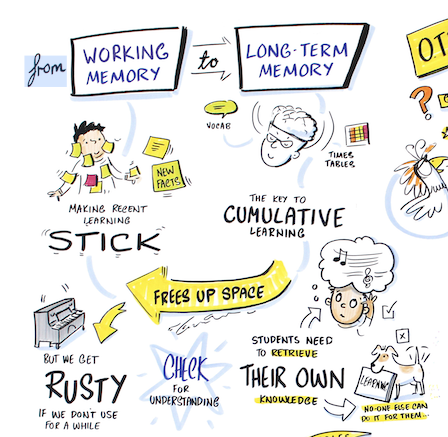
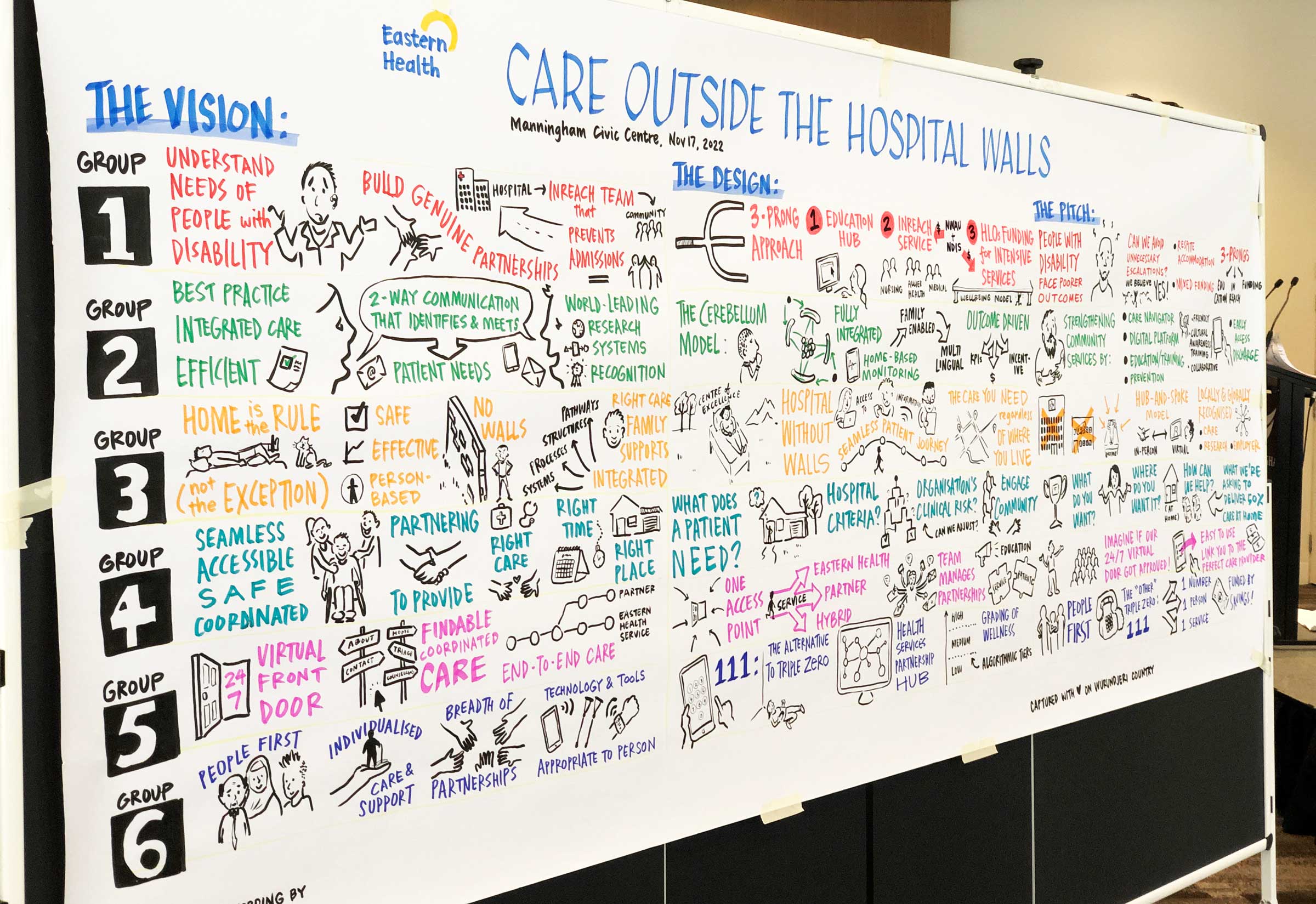
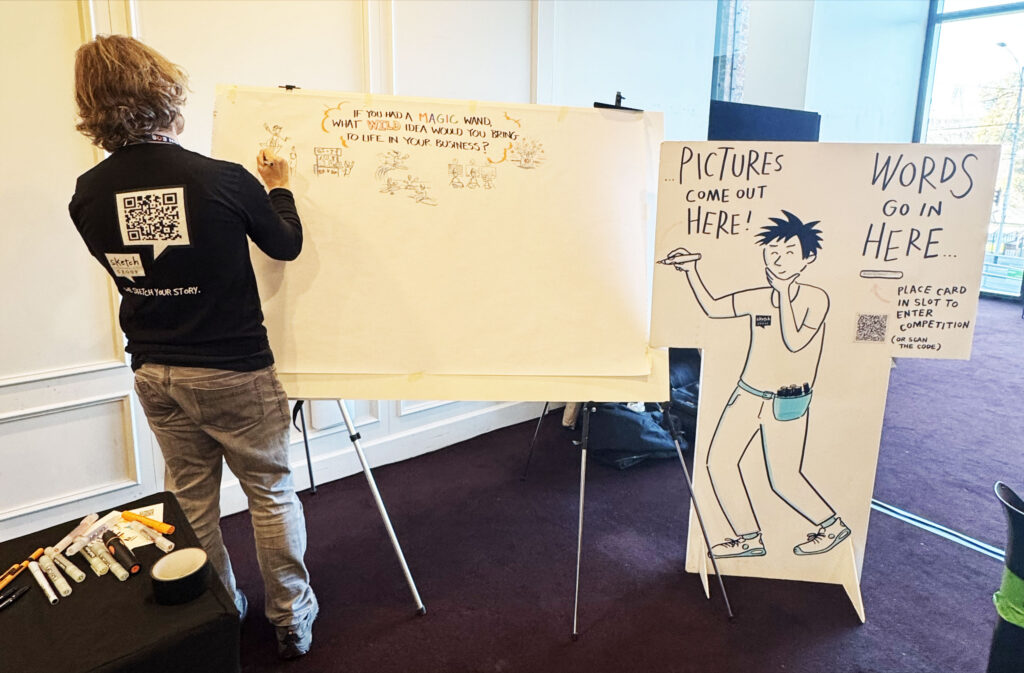
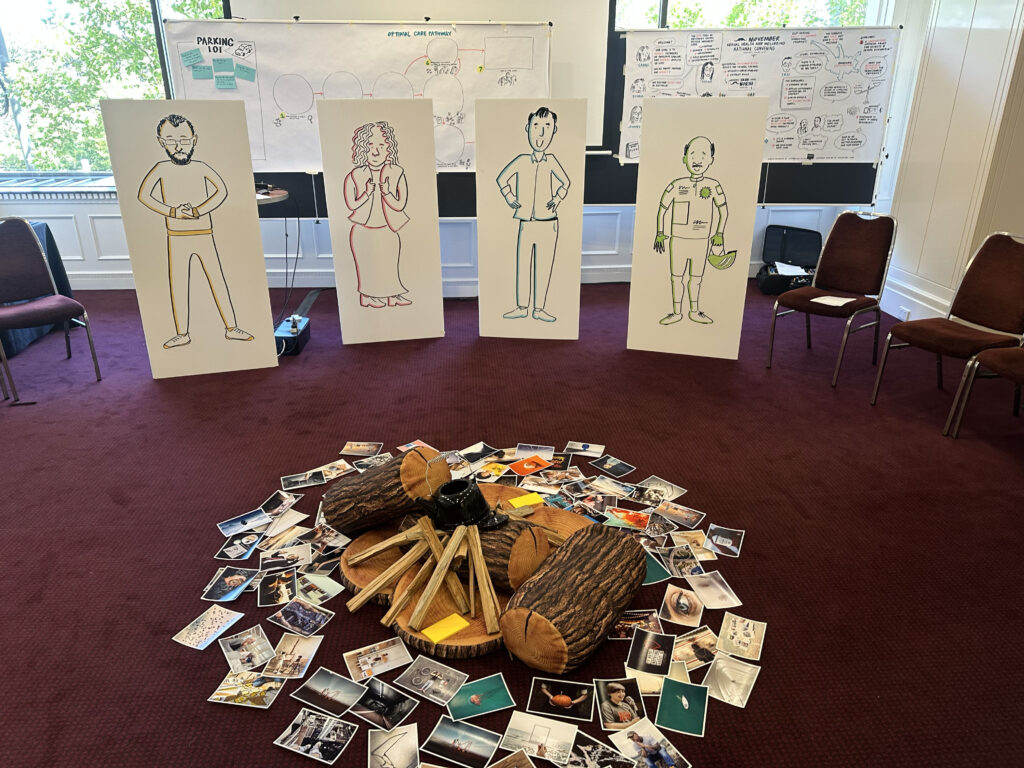
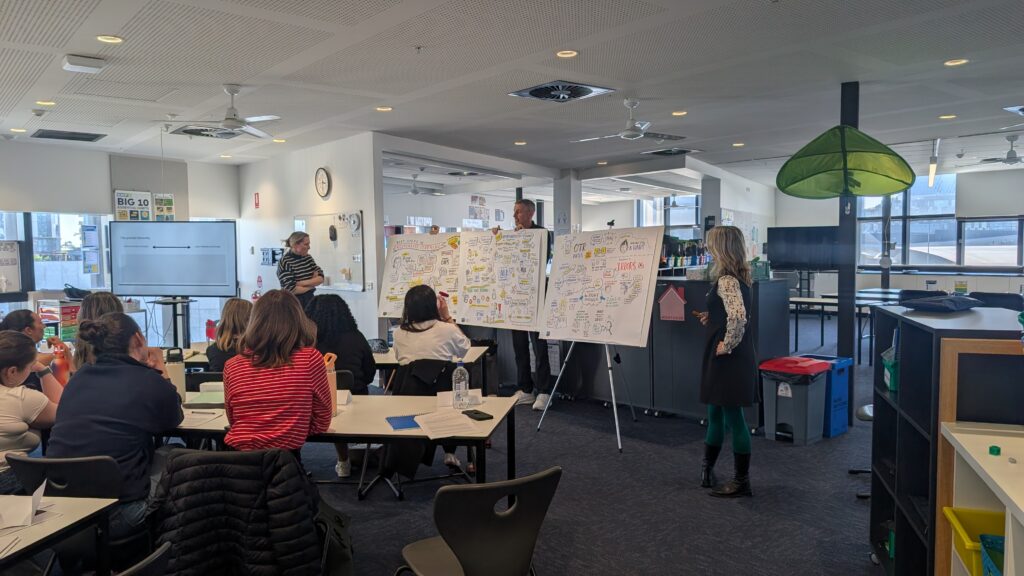
- Graphic recording (live scribing): A skilled visual practitioner captures a meeting, workshop, or conference in real time, turning spoken ideas into illustrated notes. The resulting artwork gives teams a shared record they can return to, display, and discuss.
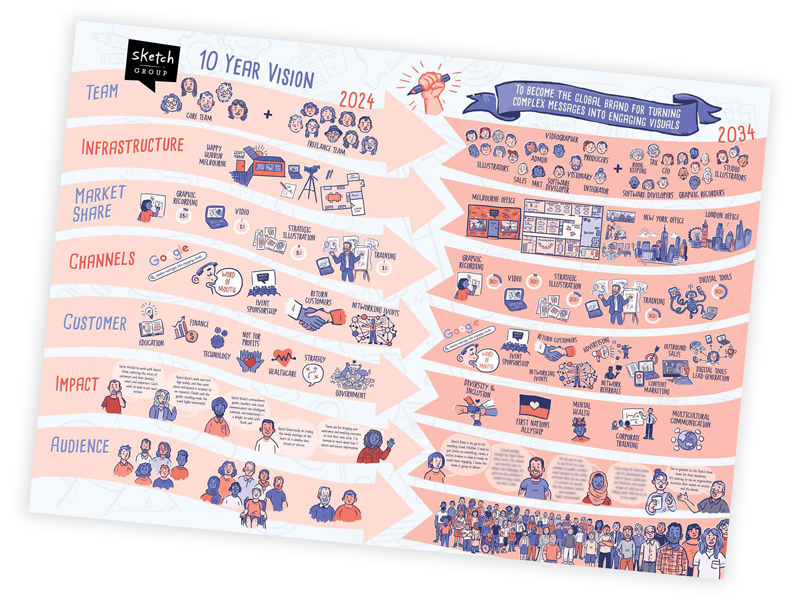
- Strategy maps and visual frameworks: Illustrated representations of an organisation’s vision, goals, and the relationships between them — giving leaders something to point to and have meaningful conversations around.
- IdeaSketch™ (facilitated visual thinking sessions): Structured workshops where a visual facilitator helps a team process a challenge or opportunity, with a visual summary produced as an output.
- Explainer videos with visual narration: Short animated or illustrated videos that communicate a concept, process, or cultural value in a way that is easy to share and consistently understood.
Team Alignment for EOS Businesses: Getting the Whole Company On the Same Page
If your business runs on EOS® (the Entrepreneurial Operating System), you already know that alignment is central to the framework. Your V/TO, core values, and Rocks only work if every person truly understands the vision — not just heard it.
The challenge is this: knowing the vision and feeling the vision are two different things.
Visuals can help your EOS business by:
- Clarifying the Vision Component: A visual summary of your V/TO — illustrated in a way that reflects your company’s personality and culture — becomes a reference point that teams actually look at.
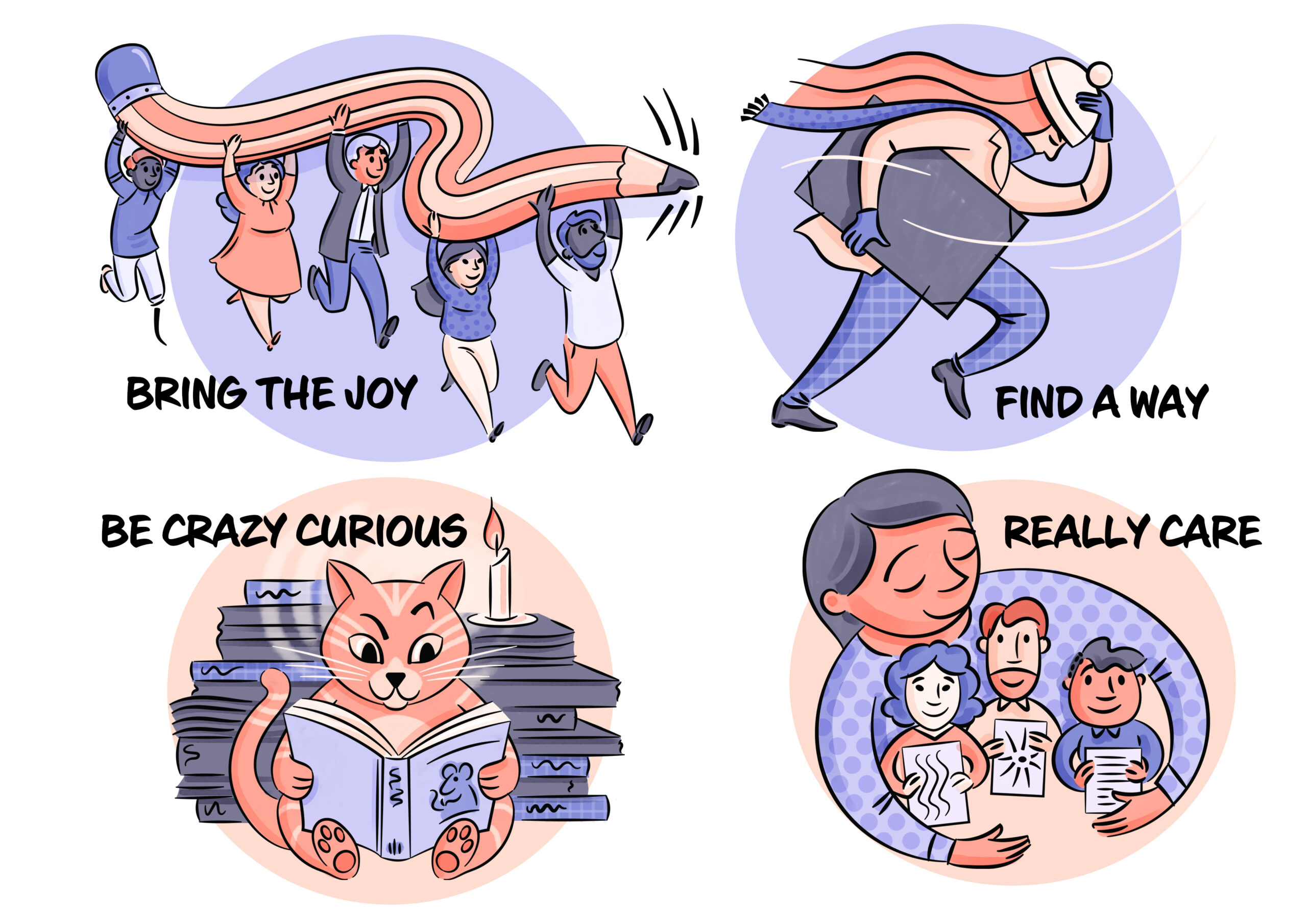

- Reinforcing Core Values: Abstract values come to life when illustrated with scenes and symbols that show what they look like in practice.
- Mapping your Rocks visually: A visual map of quarterly priorities — showing how individual Rocks connect to company goals — helps people understand their role in the bigger picture.
Ask yourself: If I walked into any team member’s workspace right now, would they be able to point to something that shows them where we are going and why it matters? A visual makes that possible.
Team Alignment in Education: Leading Schools Through Change
School leaders — whether a Principal, Vice Principal, Head of Learning, or Director of Curriculum — operate in one of the most complex alignment environments imaginable. Teachers, students, parents, and governing boards all bring different perspectives and priorities to the table.
In this environment, communication that is dense, text-heavy, or procedural rarely lands the way it’s intended. Present strategy as an illustrated map rather than a policy document — and your team is far more likely to understand, discuss, and embrace it.
High-value use cases for visual storytelling in schools include:
- Strategic planning days: Capture outcomes in a graphic recording that is displayed in the staffroom and shared with the board, keeping the conversation alive beyond the room.
- Values and culture work: Make your school’s values tangible with illustrated scenes that show what those values look like in a real school day.
- Curriculum and pedagogy rollouts: When introducing a new approach to teaching and learning, a visual explainer reduces confusion and increases buy-in.
- Community consultation: Give your school community a visual map of your strategic priorities and invite them to see where they connect.
Summary: What Visuals Do That Words Cannot
| Challenge | Text-based approach | Visual approach |
|---|---|---|
| Communicating strategy | Strategy document (rarely read in full) | Illustrated vision map (displayed, discussed, remembered) |
| Running alignment workshops | Slides and talking points | Live graphic recording with real-time visual output |
| Onboarding new team members | Handbook and HR documentation | Visual culture map and illustrated role frameworks |
| Communicating change | All-staff email | Animated explainer or illustrated narrative |
| Embedding values | Values statement on website | Illustrated scenes showing values in action |
Getting Started: Three Questions to Ask Before Your Next Team Session
Before your next planning day, all-hands, or strategy session, ask yourself:
- How will we capture what happens in the room? If the answer is “someone will take notes,” consider what a visual record could do instead.
- What does alignment look like in our organisation right now? If you asked five different team members to describe the organisation’s top three priorities, would the answers match?
- What is the one picture we need our team to carry with them? If you could give every team member a single image that captured your vision, your values, or your strategy — what would it show?