Short answer: True visibility of your business isn’t about seeing more numbers — it’s about your whole team seeing the same vision, working from the same proven process, and making decisions against the same values, without you in the room to translate. If your business only runs smoothly when you’re personally involved, that’s not a leadership bandwidth problem. It’s a visibility problem. Here’s what that actually means, and how it’s built.
Visibility of your business starts with a vision people can actually see
Every business running on the Entrepreneurial Operating System (EOS®) has a Vision/Traction Organizer. Far fewer have a vision their whole team could describe unprompted, in their own words, the same way.
That gap matters because a vision that lives in a document is a reference. A vision people can see — not just read once a year at the Annual Session — becomes a decision-making tool. It’s the difference between a team that checks a document to see if an idea fits the plan, and a team that already knows, instinctively, because the vision has been made visible enough to internalise.
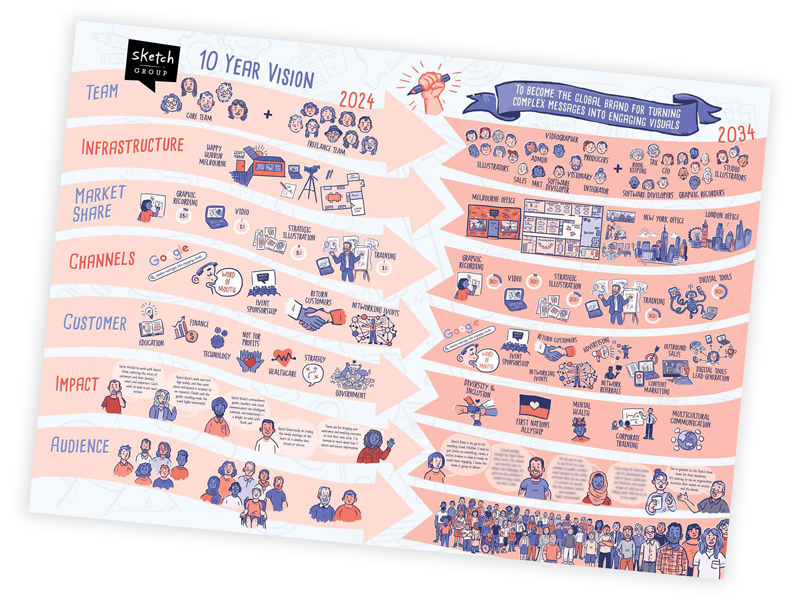
If your team can quote your product but not your purpose, that’s usually not a communication failure. It’s because the vision was written to be filed, not seen.
A proven process only works if people can follow it without you
The “P” in EOS’s Six Key Components™ exists for a reason: a documented, followed process is what lets a business run consistently whether or not the founder is watching. But documented and visible aren’t the same thing.
A process buried in a manual or a shared drive gets followed inconsistently, because people default to memory and habit under pressure — not to the page they read three months ago. A process people can see at a glance, mapped out the way the work actually flows, gets followed the same way every time, by everyone, including someone new to the role.
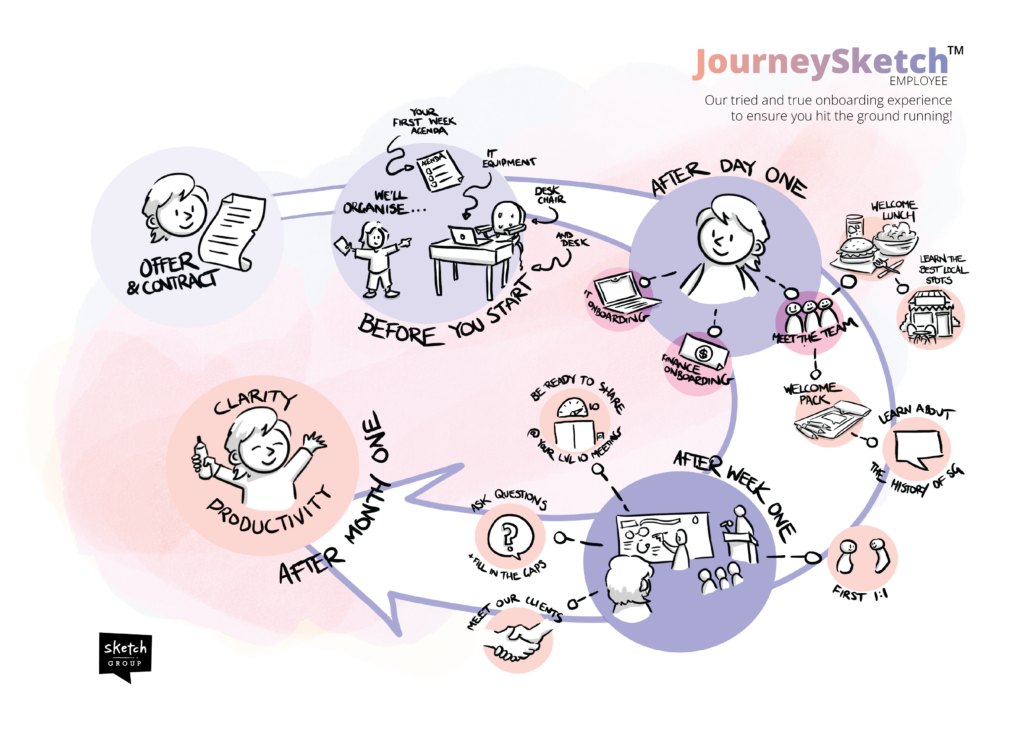
That consistency is what “visibility of your business” really delivers: not just clarity for leadership, but a business that performs the same way regardless of who’s running a given day.
Values only count if they’re visible in your business
Core Values are easy to put on a wall. They’re much harder to make visible in day-to-day decisions — in hiring, in how issues get solved, in who gets recognised in an L10.
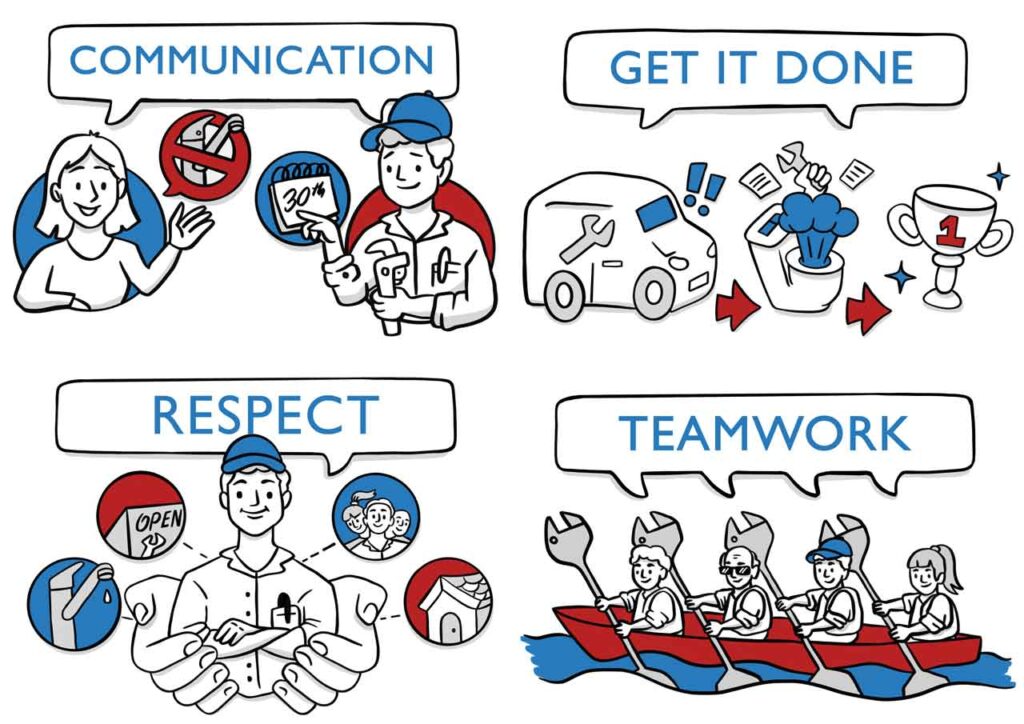
A business has true values-visibility when a new hire could infer the Core Values just by watching how the team behaves for a week, without ever being told what they are. That’s a much higher bar than a poster in reception, and it’s usually the clearest sign of whether a business’s stated values and its lived culture actually match.
Why this is a visual thinking problem, not a documentation problem
Vision, process, and values all fail the same way when they’re only written down: they require someone to interpret and re-explain them. The brain grasps structure and relationships between ideas far faster through something it can see at a glance than through pages of text — which is exactly why a well-designed visual works where a document doesn’t.
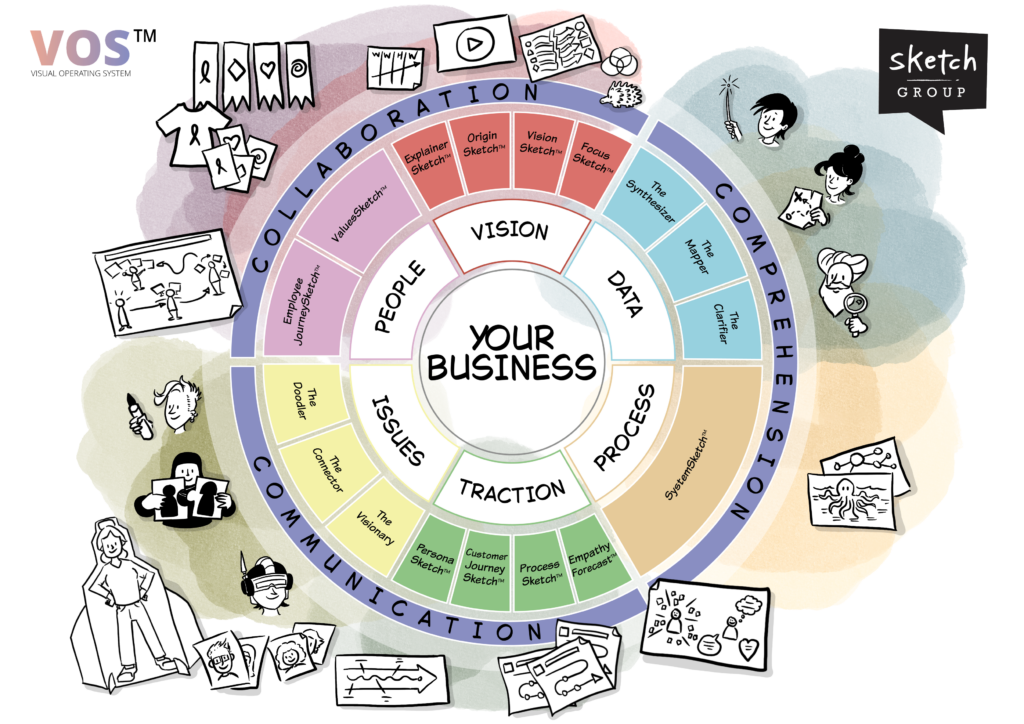
This is the thinking behind Sketch Group’s Visual Operating System (VOS®) — translating the tools you already use as an EOS-run business (your V/TO, your Accountability Chart, your core processes and values) into a single, visual source of truth your whole team reads the same way, without a translator. VOS® doesn’t replace your EOS tools. It makes your vision, process, and values visible enough to actually run the business by.
What true visibility of your business gives you back
Businesses that get this right don’t just communicate better. They get a leadership team — and a wider business — that’s aligned on where it’s going, how it works, and what it stands for, without that alignment depending on someone senior being in the room to explain it.
For a business leaders, that’s the real payoff: less time spent re-explaining the plan, and more confidence that the business will make the right call even when you’re not the one making it.
Frequently Asked Questions
What does “visibility” mean for a business running on EOS? It means your leadership team’s vision, process, and Core Values are understood the same way by everyone in the business, without needing someone to explain them. It’s the difference between having these written down and having them genuinely shared.
Is visibility the same as having a documented process? No. A documented process sits in a manual or shared drive. Visibility means that process is structured so people can see and follow it consistently on their own, without defaulting to memory or habit.
Does VOS® replace EOS tools like the V/TO or Accountability Chart? No — VOS® is built to work alongside your existing EOS tools. It translates your vision, process, and values into a visual format so they’re faster to understand and easier to share across the business, not a replacement system.
How long does it take to build a VOS® for a business? There’s no need to visualise everything at once. Most leadership teams start with whichever artefact needs the most attention right now — whether that’s the vision, a core process, or how values show up day to day — and build out from there as it proves its value in real planning sessions and day-to-day communication.
Who is VOS® best suited for? Any sized businesses — particularly those already running EOS — where the leadership team has a clear vision, process, and values, but wants them to actually stick with the wider team.
Curious what a Visual Operating System could look like for your business? Get in touch with the Sketch Group team.