Your council ran a consultation. You drafted the engagement plan, set up the online portal, sent the emails, and posted updates on the website. Three weeks later, you had fourteen responses — mostly from the same residents who always respond. Sound familiar? If your communications aren’t getting cut through, you’re not alone.
Sound familiar?
It’s one of the most frustrating realities of working in local government communications today. The intent is there. The process is there. But connecting with the full breadth of your community — particularly those who are hardest to reach — remains one of the sector’s most persistent challenges.
At the same time, trust in government institutions is declining. Australian research shows that despite genuine efforts to engage, communities increasingly feel they have limited influence over decisions that affect them. And with budgets tightening across the sector, communications teams are being asked to do more, reach more people, and demonstrate more value — with the same or fewer resources.
That’s a significant amount of pressure. And it’s why more councils across Australia are turning to sketch videos — also known as whiteboard animations or explainer videos — not as a creative flourish, but as a strategic communications tool.
Here’s what they’re solving, and how.
1. When your message is complex, clarity is everything
Policy documents, service changes, planning proposals, new guidelines — local government communications are inherently complex. The challenge isn’t just writing clearly. It’s translating technical content into something a resident with no background knowledge can understand, engage with, and act on.
Sketch videos do this by combining structured storytelling, visuals, and voiceover to guide viewers through even the most intricate topics — step by step, in plain language. The result is content that gets understood, not just seen.
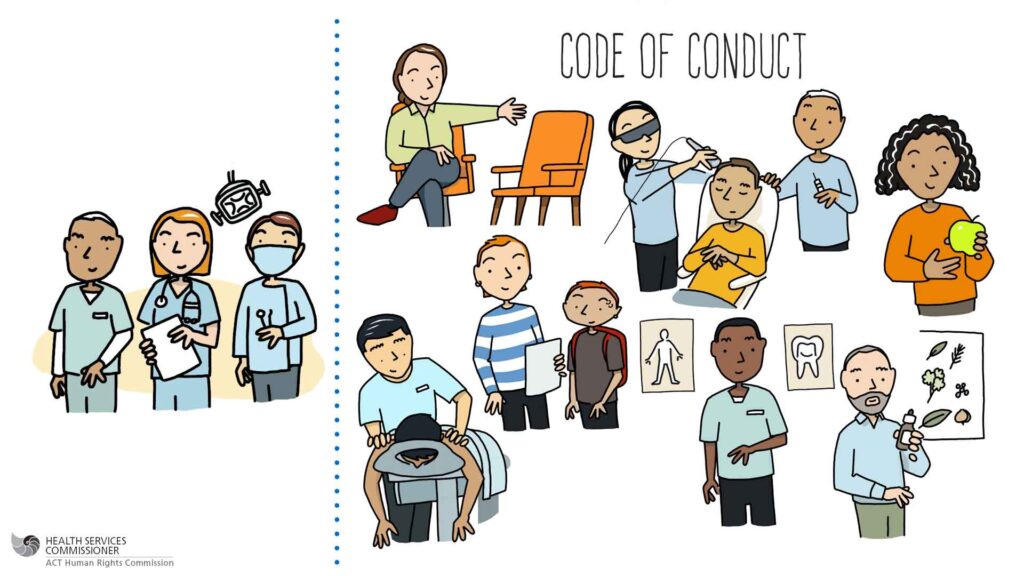
When the ACT Human Rights Commission needed to communicate a new Code of Conduct for Health Care Workers — targeted specifically at practitioners from Culturally and Linguistically Diverse (CALD) communities — they needed something that would genuinely land. We created a video using universal imagery and open captions, giving them a resource-effective way to reach a wide, diverse audience with consistent clarity.
2. Reaching the people who don’t usually respond
Community engagement practitioners consistently identify the same groups as hardest to reach: residents from CALD backgrounds, people with low literacy, older residents, and those in regional or remote areas. These aren’t fringe audiences — in many council areas, they make up a significant proportion of the community. Yet standard consultation tools (PDFs, web portals, written submissions) rarely reach them effectively.
Sketch videos change the equation. Visual storytelling works across language barriers. Captions and voiceover support residents with low literacy or hearing impairment. The accessible, non-threatening format tends to resonate with audiences who might otherwise disengage from anything that looks like “government paperwork.”
One video, localised thoughtfully, can do the work of multiple formats — which matters when your budget has to stretch.
3. Turning consultation into genuine participation
Getting community feedback isn’t just a box to tick — it’s legally and ethically important. But the process only works if residents actually understand what’s being proposed, why it matters, and how to have their say.
A well-crafted sketch video can walk people through each of those steps. It builds context before asking for a response. It reduces the confusion that often leads to either silence or misinformed backlash.
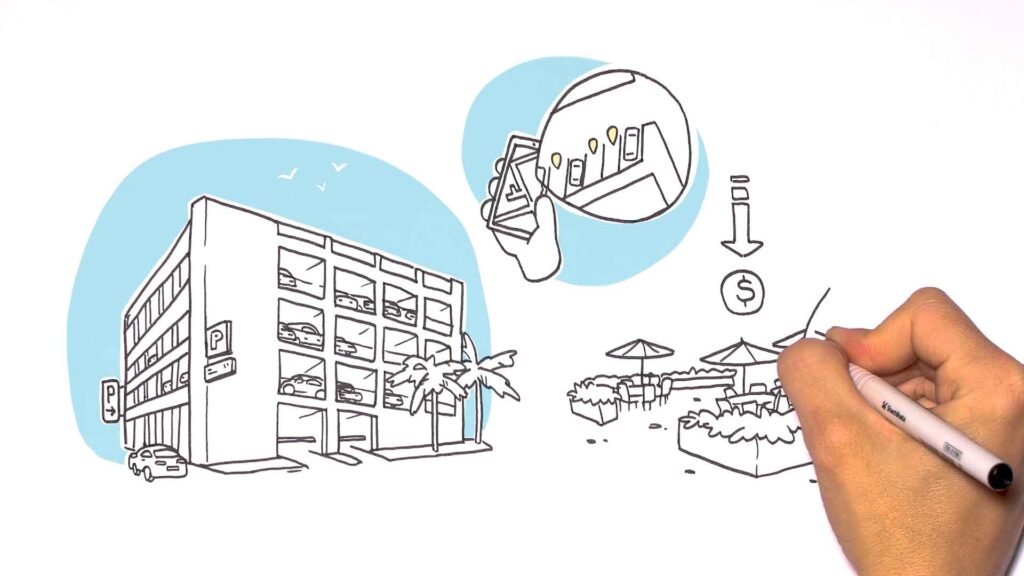
The City of Greater Geelong knew that parking was always going to be a contentious topic. Rather than lead with the proposed changes, they wanted to demonstrate that the council was genuinely listening. Sketch Group created a video that guides residents through the options under consideration, explains the council’s reasoning, and shows exactly how to provide feedback. The result became a central pillar of the entire consultation process — not an afterthought.
4. Communicating sensitive topics with care
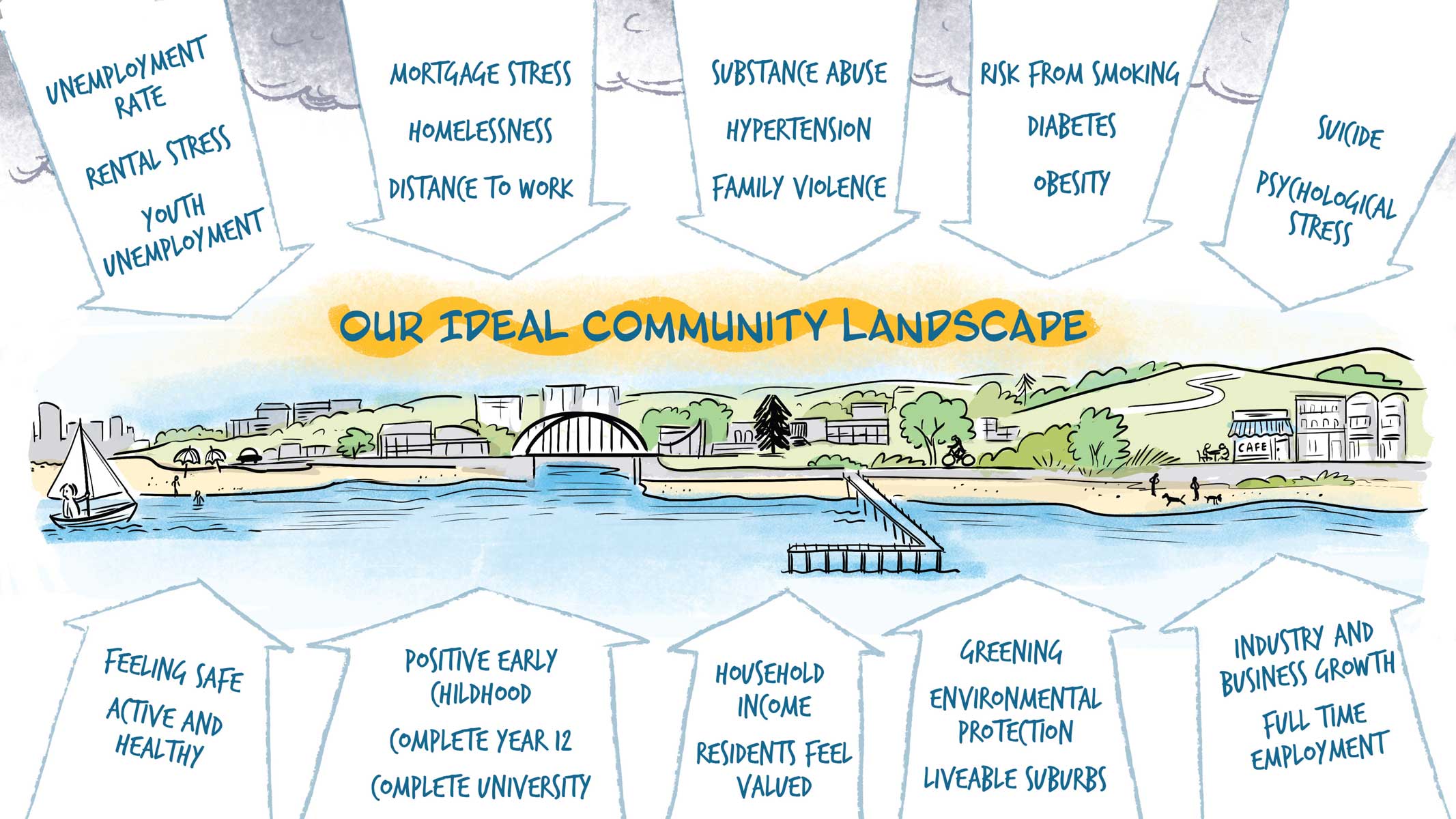
Some of the most important messages your council sends are also the most difficult to deliver — child safety, mental health support, family violence, discrimination. These topics require a careful balance: enough clarity to inform, enough warmth to not alienate.
Sketch videos are particularly well-suited to this work. The illustrative style is approachable rather than clinical. And one of the format’s real strengths is the use of visual metaphors — simple, symbolic imagery that conveys difficult or abstract ideas without confronting viewers with graphic content. A lighthouse for safety. A bridge for connection and support. These images help people grasp complex emotional concepts quickly and without distress.
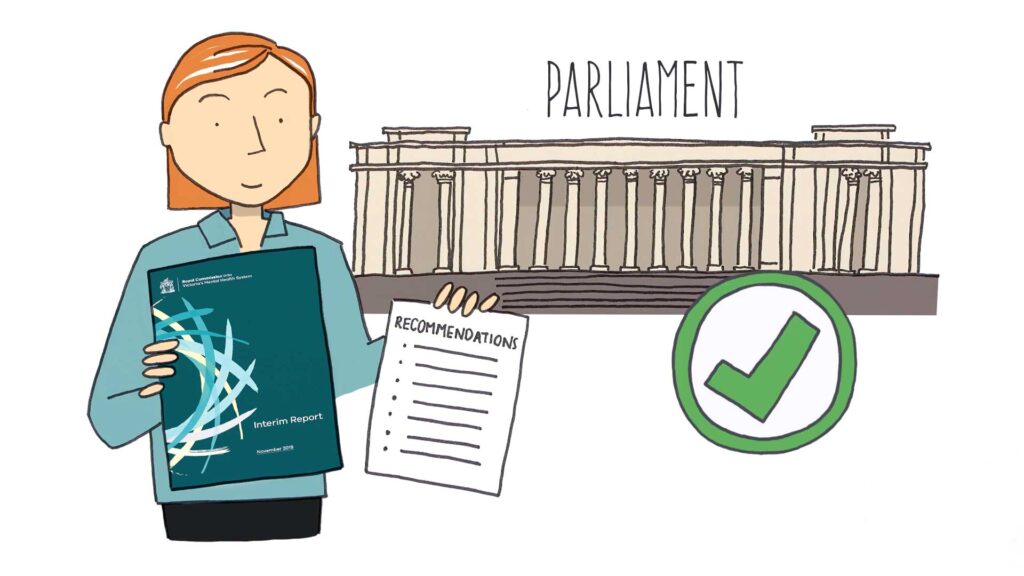
During the Royal Commission into Victoria’s Mental Health System, Sketch Group used graphic recording and whiteboard animation to help build a more coordinated, person-centred mental health system. We first captured key insights from community consultations through live graphic recording, then transformed those themes into a series of animated videos. The final outputs helped communicate complex systemic issues clearly and respectfully — while honouring the voices of the people who shared them.
5. Building trust — through how you communicate, not just what you say
Declining community trust isn’t just a PR problem. It has real implications for consultation outcomes, civic participation, and a council’s ability to implement change. People engage with institutions they trust. And trust is built through consistency, transparency, and communication that feels human.
Sketch videos work because they’re inherently relatable. They turn abstract policy into visual stories. They show the faces, the situations, and the outcomes behind the decisions — making it easier for residents to see themselves in the process.
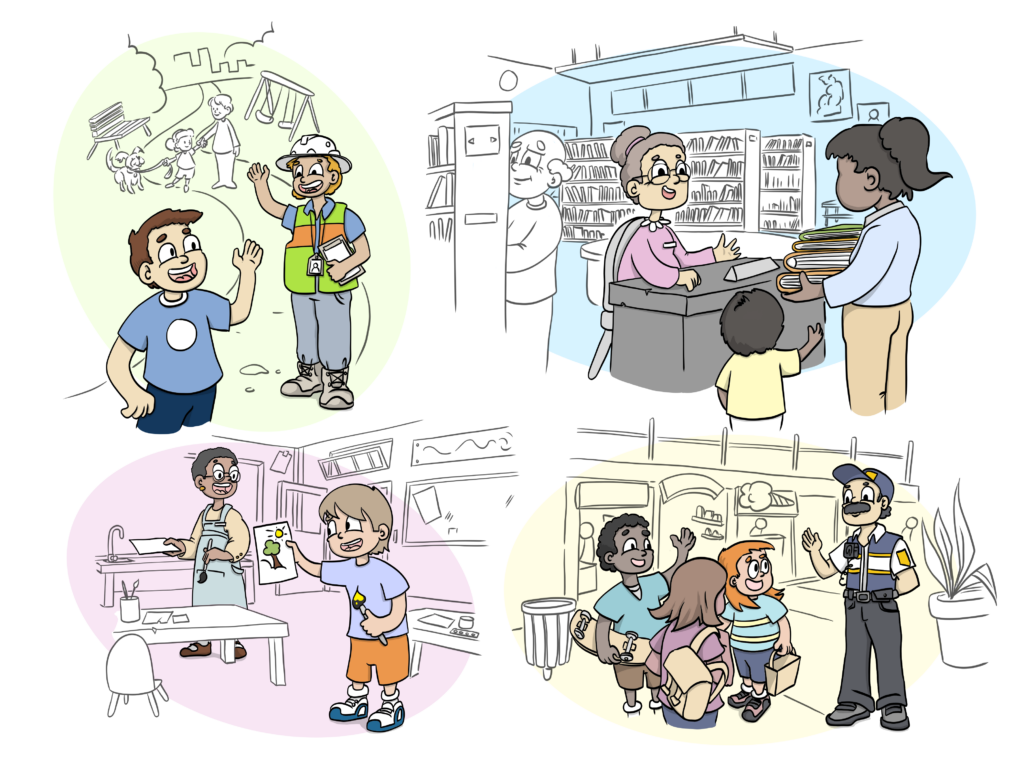
We’ve partnered with many local councils — including the City of Casey — to produce sketch videos on child safety. Each video highlighted practical information (safe environments, mandatory reporting, where to get help) in a warm, accessible tone. Councils embedded these videos across community programs, staff training, and digital platforms — building shared responsibility in a way that written materials rarely achieve.
6. Content that works harder across more channels
A sketch video isn’t a single-use asset. One well-produced video can work across your website, social media, community newsletters, digital screens at council facilities, staff induction programs, and councillor presentations. It can be captioned for accessibility, translated for CALD communities, and repurposed for different campaigns.
For councils managing tight budgets, this versatility matters. Rather than commissioning separate assets for each channel or campaign, a sketch video scales across your entire communications strategy.
Social media in particular rewards video content — video cuts through where static posts don’t — it outperforms on almost every engagement metric and is far more likely to be shared.
7. Support for campaigns, elections, and civic participation
Whether you’re running a public awareness campaign, promoting a community initiative, or encouraging residents to vote in local elections, your message needs to be both clear and compelling. Sketch videos distil key information into short, engaging stories that people can quickly understand and share — without needing to read a lengthy report or attend an information session.
They also help demystify local government itself — making processes feel more transparent, accessible, and participatory. When communities better understand how decisions are made and how they can contribute, participation increases.
We worked with Gaetano Greco, former mayor of the City of Darebin, when he announced his candidacy for the 2022 Victorian State Election. Rather than using a professional voiceover, Gaetano recorded his own — bringing an authenticity that scripts alone can’t manufacture. The video amplified community voices alongside his own campaign priorities, and was distributed across social media and local channels to help residents quickly understand his values and goals.

A Smarter Way to Cut Through the Noise
Local government communicators are navigating a complex moment — declining trust, harder-to-reach audiences, rising community expectations, and constrained resources. The old playbook of PDFs, press releases, and web portals isn’t enough to cut through anymore.
Sketch videos won’t solve every challenge. But they are a proven, versatile, and cost-effective way to communicate more clearly, reach more people, and build the kind of trust that translates into genuine community participation.
If your team is planning a consultation, campaign, or community initiative — or if you’re simply trying to get important information to more of your residents — we’d love to show you what’s possible.